

Sepehr Energy Jahan sells oil in euros through Hong Kong-based Huatai Limited, financing Iran's military apparatus
The methods by which the Iranian government managed to bypass Western sanctions have been revealed, as until recently it used front companies for transactions through China in euros, successfully maintaining its financial reserves, according to documents cited by Euractiv. On Tuesday, the country's two largest state-owned banks suspended operations—after the Iranian rial had already plummeted to approximately 1,500,000 per dollar in January. Despite this, the regime maintains reserves through sanctions-evasion mechanisms and shadow banking structures. Western intelligence documents seen by Euractiv state that until recently, Iran was selling oil through front companies in China, with transactions conducted in euros.
Concentration of exports in China
Western intelligence agencies estimate that approximately 90% of Iranian oil exports end up in China. Although there is no comprehensive estimate, analysts state that a network of front and shell companies processes transactions worth billions of euros annually. Hundreds of millions of euros are estimated to pass through the European banking system, as international payments rely on correspondent banking relationships. Within this shadow banking network, a significant concentration of euro accounts is recorded, many through private financial institutions. Among the banks handling these transactions are Deutsche Bank, Commerzbank, Standard Chartered, Barclays, BNP Paribas, as well as the German branches of the Bank of China and J.P. Morgan SE.
Difficulty of tracking
Banking officials have been aware of the issue for years, analysts say, adding that the constantly shifting web of front companies makes tracking transactions difficult, as banks only see the immediate customer and the next recipient. An example of the Iranian shadow banking method is Sepehr Energy Jahan, an Iranian state-owned company that sells oil to China on behalf of Iran's Armed Forces General Staff, which is responsible for the regular armed forces as well as the Revolutionary Guard (IRGC). In 2023, the company was placed on a sanctions list by the US Treasury Department. Invoices examined by Euractiv show that Sepehr Energy Jahan sells oil in euros through the Hong Kong-based investment firm Huatai Limited, financing Iran's military apparatus, although disagreements occasionally arise between the IRGC and the regular armed forces over the distribution of profits.
Channels in the EU
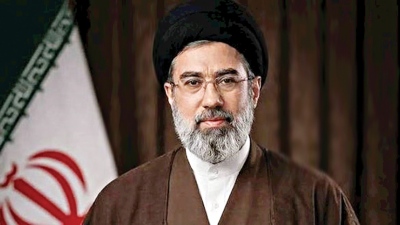
Western intelligence estimates that additional millions from the illegal oil trade have been invested in European Union countries. Iran's new Supreme Leader, Mojtaba Khamenei—successor to his late father Ali Khamenei—controls a global real estate empire that includes hotels in Frankfurt and Mallorca, according to a report by Bloomberg. "If sanctions-evasion networks or networks connected to the IRGC are storing or moving assets in Europe, these must be identified and frozen without delay," said Hannah Neumann, chair of the parliamentary delegation for relations with Iran. "Sanctions are only credible if they are strictly enforced," she added, emphasizing that this means "closing loopholes, strengthening financial intelligence cooperation, and ensuring that assets linked to sanctioned individuals or networks cannot remain quietly in European jurisdictions." It is noted that the EU on Wednesday imposed sanctions on 19 Iranian officials and entities, but Mojtaba Khamenei—who is subject to US sanctions—is reportedly not included among them.
www.bankingnews.gr


Σχόλια αναγνωστών